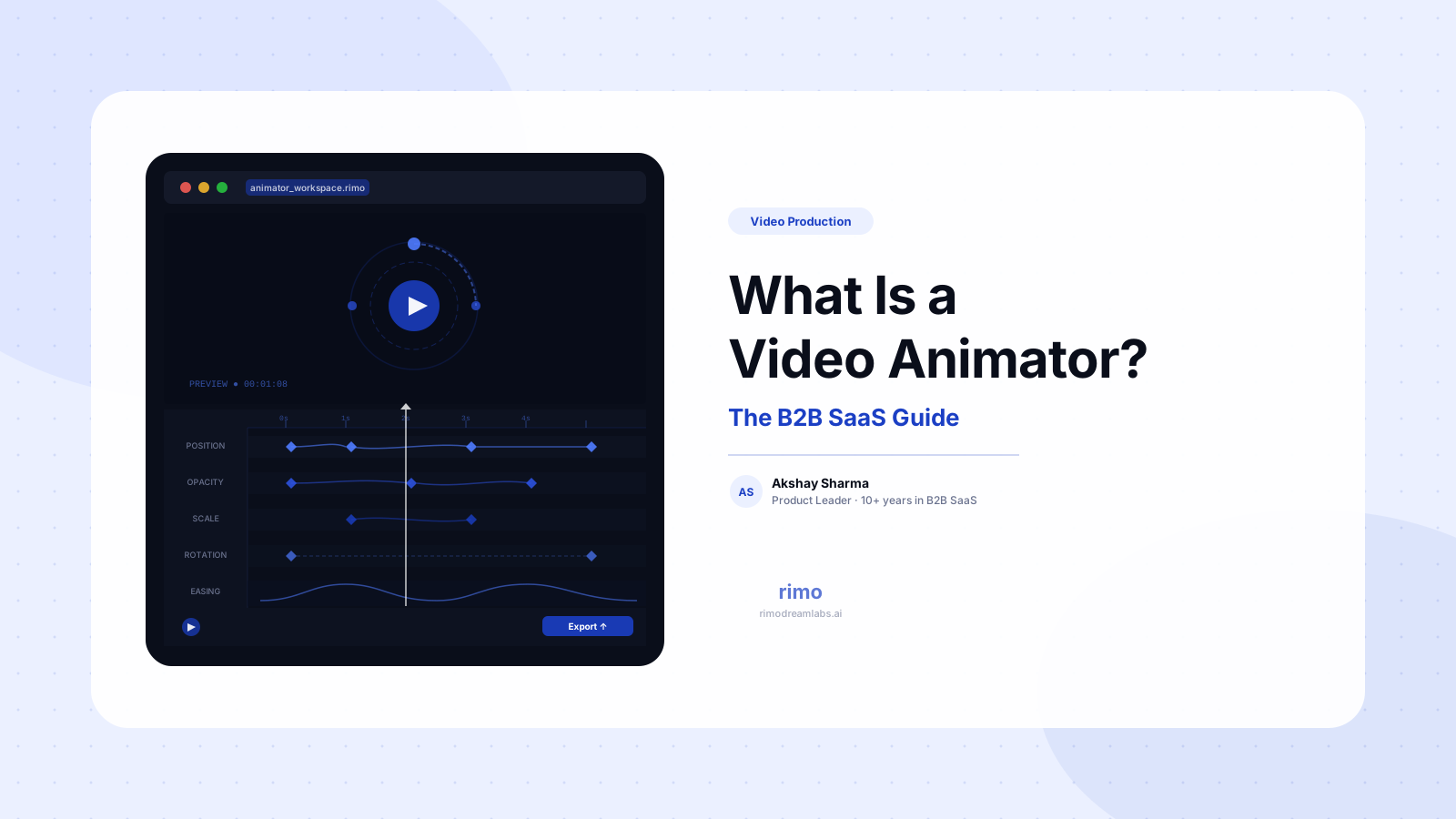
What Is a Video Animator? The B2B SaaS Guide
Your product team just shipped a feature overhaul. The new onboarding flow is cleaner, the dashboard is redesigned, and there's a new integration your sales team is already pitching in active deals. You need a demo video for the website, a cut for the email campaign, and a 30-second version for LinkedIn — by Thursday.
The video editor you work with can handle a screen recording. But the video you have in mind isn't a screen recording. It's animated — clean motion graphics showing the workflow, a branded explainer for the new integration, a polished product loop for the paid ad. For that, you need a video animator.
Except you don't have one. And you're about to discover why the gap between "we need animation" and "we can produce animation at the speed this product moves" is one of the most expensive, underestimated problems in B2B SaaS marketing.
In this guide
- What is a video animator?
- The 4 types of video animators — and which one B2B SaaS teams actually need
- What a video animator does day-to-day in B2B SaaS marketing
- The real cost of animation for SaaS teams
- Why animation tools keep underdelivering
- The B2B SaaS animation problem: keeping pace with the product
- When to hire a video animator — and when not to
- FAQ
What is a video animator?
A video animator is a specialist who creates the illusion of motion — transforming static images, graphics, text, and interface elements into moving sequences that tell a story, explain a process, or demonstrate how a product works. Unlike a video editor who works with footage that already exists, a video animator builds visual assets from scratch and then brings them to life.
The term covers a wide range of specialists and output styles: from character animators creating brand mascots for TV commercials to motion graphics designers making product launch explainers for SaaS companies. In B2B SaaS marketing specifically, the video animator your team actually needs is usually not the same person making illustrated characters for agency campaigns. The relevant skill is narrower — taking your product's visual language and turning it into clean, professional motion that communicates how your software works without a screen recording.
That distinction gets lost in most job descriptions and budget conversations. Understanding what a video animator does — and which type your team needs — is the first step toward not overpaying for the wrong specialist or underinvesting in the right one.
The 4 types of video animators — and which one B2B SaaS teams actually need
Not all video animators produce the same type of output or use the same toolset. There are four categories relevant to B2B SaaS teams, and they are not interchangeable.
2D character animators
These specialists create animated characters — the illustrated figures, mascots, and people who appear in explainer videos and brand campaigns. Tools like Vyond and Powtoon were built primarily for this use case. Character animation works well for top-of-funnel awareness content where brand personality and narrative do the heavy lifting.
The challenge is cost and maintenance. G2 reviewers of Vyond consistently flag two things: the learning curve is steeper than advertised, and the asset library — the range of characters, expressions, and poses — feels limited once you've been using the tool for a few months. What starts as "we can do this in-house" often becomes "we need someone who already knows this tool" after the first two projects.
Motion graphics animators
Motion graphics animators work with abstract visual elements: animated icons, data visualizations, typographic sequences, interface callouts, and transition graphics. This is the most common animation style in B2B SaaS marketing — the clean, branded visuals in product launch emails, the icon animations in homepage hero sections, the visual explainers in onboarding flows.
Motion graphics tend to have a longer shelf life than screen recordings. A well-designed motion style can be reused across content types for 12–18 months without looking dated. For most B2B SaaS marketing teams, this is the animation category with the best return on investment — provided you have someone who can produce it at the right pace.
UI/product demo animators
A smaller and more specialized category: animators who focus on making software interfaces look intentional and compelling in motion. They create smooth cursor animations, UI hover states, and product workflow sequences that communicate how software works — without requiring a live screen recording. The polished product loops you see on SaaS pricing pages, where everything moves too cleanly to be real footage, come from a UI/product demo animator.
This is the category most directly relevant to product demo video production and the hardest to hire for. The skill set requires both animation craft and a working understanding of software product design. That combination is rare and priced accordingly.
3D animators
3D animation produces the most visually striking output: photorealistic product renders, architectural walkthroughs, engineering visualizations. For most B2B SaaS marketing teams, 3D animation is the wrong tool for the job. Projects start at $5,000 per finished minute on the low end. Turnaround times are measured in weeks. The use cases where 3D adds meaningful value over polished 2D motion graphics in SaaS marketing are narrow — hardware companies and enterprise infrastructure vendors are the main exceptions. Most SaaS teams don't need it.
What a video animator does day-to-day in B2B SaaS marketing
When a B2B SaaS team works with a video animator, the day-to-day workflow involves more than most briefs anticipate.
Translating a script into a visual structure. The PMM or content lead provides a script and a rough description of what the video should communicate. The animator's first job is to translate that script into an asset list — which icons need to be built, what the UI mockups should show, how the transitions will work, what the screen-by-screen sequence looks like. This translation step alone typically takes two to four hours before any animation has started.
Building every visual asset. This is the part that surprises teams new to animation: there is no footage to work with. Every element — interface mockup, product icon, background graphic, animated callout — has to be created from scratch or adapted from existing brand assets before motion can be applied. For a two-minute product explainer, building assets often takes more time than animating them.
Applying motion, timing, and easing. The actual animation work: deciding how each element enters and exits the frame, what easing curves the movements use, how long each beat holds before the next transition. Good animation feels invisible — viewers perceive clarity and momentum, not the craft that produced it. That invisibility takes real skill and experience to achieve.
Revision cycles. Animation revision cycles are slow compared to almost every other content format. Changing an animated sequence often requires going back to the source files, adjusting keyframes, re-rendering, and re-exporting. A copy change that takes a writer five minutes can take a video animator two hours. G2 reviewers of Powtoon and Animaker consistently flag the time cost of iteration as a top pain point — the tools make the first pass feel fast, then slow down dramatically when revisions start.
Versioning for distribution. A homepage animation has different dimension and compression requirements than a LinkedIn post, a product tour embed, or a sales deck. The video animator manages this versioning, or it falls back to the marketing team and the timeline slips.
The real cost of animation for SaaS teams
Budgeting for animation is genuinely complicated, because the non-obvious costs outweigh the quoted ones.
Freelance 2D animators in the US charge $25–$100 per hour for standard motion graphics work, with experienced specialists at the higher end (ZipRecruiter, 2026). On a project basis, a polished 60-second animated product video costs anywhere from $500 (template-based, offshore) to $10,000 and above (custom, US-based senior animator). The typical B2B SaaS brief — a 90-second product explainer with branded motion graphics — lands between $2,000 and $5,000 for a single deliverable.
That number looks manageable until you factor in what happens after launch.
Your product ships updates. The UI in the animated explainer shows the old navigation. The feature the video highlights has been renamed. The workflow it demonstrates now takes fewer steps. None of these are dramatic changes — but they compound. Within 60–90 days of publishing, a product demo animated video has a real chance of showing buyers something your product no longer does.
At that point, you're choosing between paying for a partial re-animation (typically 30–50% of the original cost), running outdated content that misrepresents the product, or quietly pulling the video and letting that content slot go dark. Most teams choose the third option without consciously deciding to.
At four updates per year — conservative for any actively shipping SaaS product — maintaining a single animated explainer can cost $8,000–$15,000 annually just in update fees. The product demo video cost breakdown covers how this compares across production models and why so many teams underestimate their annual spend.
Animation at sprint speed, without an animator
Rimo generates polished product demo videos from a brief — your actual product screens, your brand, ready in under an hour. No animation queue, no re-briefing every sprint, no production lag between what ships and what buyers see.
Why animation tools keep underdelivering
Most marketing teams that try to produce animation in-house eventually run into the same wall, regardless of which tool they choose.
The tools exist. Vyond, Animaker, Powtoon, and Adobe After Effects are all real products with real capabilities. But G2 reviewers point to a consistent pattern of disappointment that goes deeper than any single product's limitations.
The learning curve is steeper than the demos suggest. Vyond's positioning is that "anyone can make professional animation." In practice, G2 reviewers describe needing significant trial-and-error time before producing work that looks intentional rather than template-obvious. The gap between "anyone can make a video" and "anyone can make a video worth publishing on your pricing page" is real, and it doesn't shrink much with time unless animation becomes someone's primary job.
The asset libraries age quickly. Powtoon and Animaker reviewers on G2 consistently flag limited template variety and outdated visual styles as top complaints. When you're building product marketing content in 2026 and the character styles available look like 2019 explainer videos, the gap between your brand standards and what the tool can produce becomes a problem.
Reliability is a recurring issue. Multiple Animaker reviews on G2 describe the tool freezing and forcing users to restart their work at the worst possible moments. "The app constantly lags and when I try to create or edit something it freezes, forcing me to refresh the page and start over" is not an isolated complaint — it appears across multiple reviews from different users. For a team with a Thursday deadline and a product launch on Friday, that kind of failure has real consequences.
Cost pressure drives the wrong upgrades. Powtoon users frequently note that the plan you'd actually want to use — the one without forced branding on exported videos — requires an $89/month subscription, not the $39/month tier that shows up first in the pricing table. The effective cost of "we'll just use an animation tool in-house" is often higher than it appears at sign-up.
None of these issues are bugs. They reflect the fundamental design challenge of making animation accessible to non-animators. The tools work. They just don't work fast, and they don't work cheaply — two constraints that B2B SaaS marketing teams can't afford to ignore.
The B2B SaaS animation problem: keeping pace with the product
Here is the constraint that no general "what is a video animator" guide addresses: in B2B SaaS, your product is always moving.
A traditional agency or freelance animator operates on a linear project model. Brief, produce, approve, deliver. That model assumes the thing being animated is stable. Brand films, hardware product reveals, corporate explainers — these are produced once and run for 12–18 months. The production economics work because the asset is durable.
B2B SaaS product marketing doesn't work this way. Features ship every two to four weeks. Interface names change. Workflows that your explainer shows in four steps now take three. The navigation in the animation no longer matches the product by the time the campaign goes live. This is not a hypothetical — it's the baseline reality for any product marketing team working at modern software development velocity.
The result is a pattern that repeats across SaaS companies of every size: invest in animation, publish the video, ship two product updates, watch the video become partially inaccurate, delay the update because re-animation is a project, let it run outdated because pulling it feels worse than keeping it. The video eventually stops being promoted in new campaigns, buried but never officially retired.
The answer isn't to find a faster animator or a cheaper tool. It's to rethink the production model entirely — moving from "animate once, update when you can afford to" to "generate from the current product state, update when the product changes." This structural shift is covered in depth in the guide on AI-based demo video automation, which covers what the workflow actually looks like for teams moving at sprint cadence.
When to hire a video animator — and when not to
The decision isn't binary. Here's a practical framework based on what actually works at different team sizes and content volumes.
Hire a freelance or in-house video animator when:
- You're producing brand-level content with a 12+ month shelf life — company origin stories, executive thought leadership series, brand campaigns where cinematic craft adds real value
- You need character animation or illustrated storytelling that communicates brand personality, not just product workflows
- You have a consistent production cadence (four or more animated pieces per month) that justifies the coordination overhead of a dedicated specialist
Use animation software in-house when:
- You have a team member with genuine design or motion skills who can own the tooling — not a PMM who will learn it under deadline pressure
- Your output needs are modest — one or two short animations per quarter — and quality consistency matters less than creative control
- Your content doesn't need to be updated frequently after publication
Use an AI-native platform when:
- Your demo content needs to reflect the actual product state and your product ships updates regularly
- You need persona-specific or use-case-specific video variations — the kind of versioning that's economically impossible at per-project animation rates
- The bottleneck is time-to-publish rather than creative quality, and your marketing team needs to move at the same speed as your engineering team
Understanding which video production model applies to your content type — and being honest about which model your team can actually sustain — determines how much of your animation spend produces ROI versus how much of it produces content that quietly goes stale.
The teams doing this well in 2026 aren't choosing between "hire a video animator" and "do it yourself." They're separating content by shelf life: high-durability brand work goes to human animators; high-velocity, product-tied content goes to AI-native platforms that keep up with the product.
Try Rimo free and see how long your next product demo actually takes to produce — without an animation queue, without a re-briefing cycle, and without waiting for a specialist who doesn't know your product the way you do.
FAQ
What does a video animator do?
A video animator creates motion content by building visual assets from scratch — icons, graphics, interface mockups, illustrated characters — and then applying animation, timing, and motion principles to make those elements move in a way that communicates a story or workflow. Unlike a video editor who assembles existing footage, a video animator constructs every visual element before any motion is applied. In B2B SaaS marketing, the most common output is motion graphics explainers, animated product loops, and branded UI animation for demo videos.
How much does a video animator cost?
Freelance video animators in the US charge $25–$100 per hour for 2D motion graphics work, with experienced specialists commanding higher rates (ZipRecruiter, 2026). On a project basis, a polished 60-second animated product video typically costs $2,000–$5,000 from a mid-tier freelancer and $5,000–$10,000+ from a senior US specialist or small agency. Hidden costs — revision cycles, asset updates when the product changes, versioning for different platforms — typically add 30–50% to the original project cost.
What's the difference between a video animator and a video editor?
A video editor works with footage that already exists — screen recordings, camera video, voiceover audio — and assembles it into a finished asset through cutting, sequencing, and post-production. A video animator creates the visual content from scratch, building every element before bringing it to life through motion. Many product explainer videos require both: a video animator creates the animated components, and a video editor integrates them with any recorded footage and manages the final assembly.
What animation software do video animators use for B2B SaaS content?
The most common tools for B2B SaaS motion graphics are Adobe After Effects (industry standard for professional motion designers), Vyond and Powtoon (template-based tools for character and explainer animation), and Rive or LottieFiles for interactive UI animations embedded in products. For teams without dedicated animation resources, AI-native platforms like Rimo generate polished product demo video from a brief without requiring animation software or skills — a different approach that trades creative flexibility for speed and product accuracy.
Can AI replace a video animator for B2B SaaS demos?
For brand films, character-driven storytelling, and high-production creative campaigns, no — human animation craft and creative judgment still produce output that AI tools don't match. For product demo videos, product explainers, and UI walkthroughs that need to stay current with a fast-shipping product, AI-native platforms are increasingly the better choice. They're faster, cheaper to update, and don't require a specialist who has to be re-briefed on the product every sprint. The key is understanding which content type you're making before choosing the production model.
What's the difference between a video animator and a motion graphics designer?
The terms overlap significantly. A motion graphics designer is typically focused on graphic design systems brought to life through motion — typography, icons, data visualization, branded transitions. A video animator is a broader term that includes motion graphics but also covers character animation, 3D, stop-motion, and other animation disciplines. In B2B SaaS marketing, the person you're usually looking for is a motion graphics designer or a UI animator — not a character animator or a 3D specialist. Getting that distinction right in your job description or freelancer brief saves significant time and money.
Akshay Sharma
Product Leader · 10+ years in B2B SaaS
Akshay has spent 10+ years building and marketing B2B SaaS products. He writes about product storytelling, demo production, and the operational side of product marketing.