How a SaaS Startup Cut Demo Video Production from 3 Weeks to 30 Minutes
How a 50-person B2B SaaS company replaced their agency-dependent demo video process with Rimo and shipped launch-day demos for every feature release.
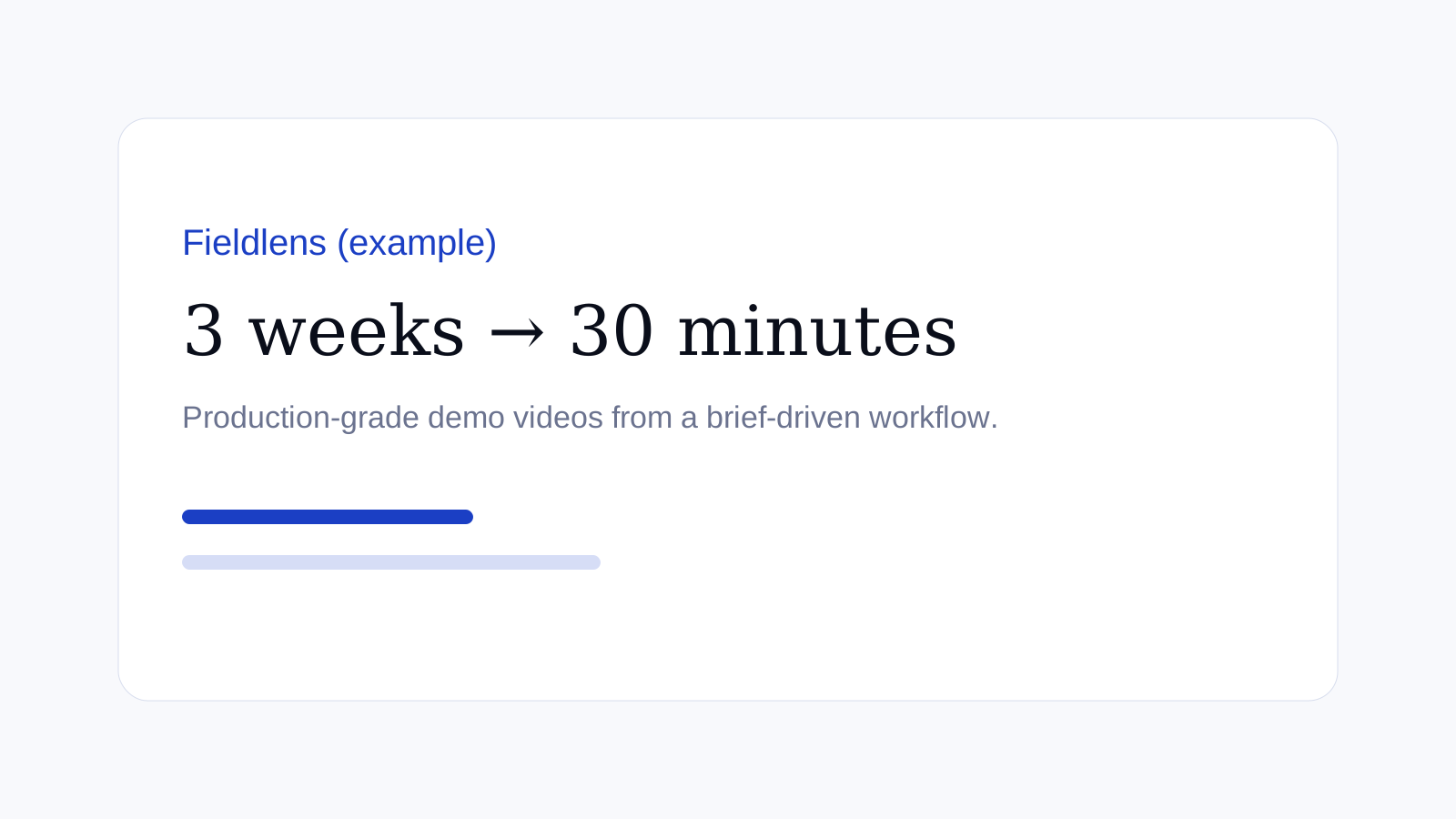
Fieldlens cut demo video production from roughly three weeks to thirty minutes by replacing an agency-led process with a brief-driven workflow that captured real product screens in the background. The change was not just about speed. It let the team ship launch-day demos for new releases instead of treating video as a separate project that lagged behind the product.
The Challenge
Fieldlens had the classic B2B SaaS demo problem. The product team shipped quickly, the PMM team understood the story, and the sales team constantly needed updated assets. But the demo video workflow sat outside that shipping rhythm. To create a polished video, the team usually had to brief an outside editor, prepare a recording environment, collect raw footage, and wait through rounds of editing feedback.
That process produced good-looking assets, but it was too slow for the way the company actually released product. Videos were often ready long after launch. Some releases never got a proper demo at all because the team could not justify the production overhead. In practice, the workflow forced Fieldlens to choose between quality and speed.
The PMM team also felt a coordination gap. They knew the message they wanted the video to communicate, but they were still dependent on a multi-step production chain to turn that into an asset. Product managers had context, but not the bandwidth to choreograph recordings. Sales engineers often compensated by recording their own ad hoc walkthroughs, which helped in the moment but created inconsistency across the market.
The Solution
Fieldlens adopted a brief-first process with Rimo. Instead of treating demo creation as a bespoke media project, the team defined the audience, the value story, and the specific product flow to show. That brief became the source of truth for the workflow.
Rimo then used that brief to structure the sequence, capture real product screens from a controlled environment, and produce a polished demo draft without requiring a manual recording session. The team did not need to coordinate agency schedules or move footage through a traditional editing pipeline before seeing a usable first version.
We stopped thinking about demo videos as special projects. Once the process became brief-driven, video started to move at the same speed as the launch plan.
The implementation mattered as much as the idea. Fieldlens standardized three things:
- A repeatable intake brief for every demo request.
- Stable product states with clean demo data for recording.
- Clear ownership for review and approval after the first draft appeared.
Those constraints made the workflow easier to trust. The PMM team could start with the message. The product team only had to support a known path through the product. The sales team could request updates without starting from zero every time. The company turned demo production into a system instead of a string of favors and handoffs.
The Result
The first result was speed. What used to take around three weeks moved to roughly thirty minutes for a production-grade draft. That changed internal behavior quickly. Teams started requesting demo videos for more launches because the process no longer felt expensive in time and coordination.
The second result was coverage. Because the workflow was faster and lighter, the company could create launch-day videos for feature releases that previously would have shipped without video support. That improved alignment across marketing, product, and sales. Everyone worked from the same visual explanation of the product.
The third result was consistency. Instead of every team improvising its own demo format, Fieldlens could create videos from a shared production system. That made it easier to keep tone, quality, and structure aligned even when the underlying message changed from one release to the next.
The company also found an operational benefit that mattered more over time than the first time savings. Because the workflow used real product screens and structured briefs, updates became much easier. When the product changed, the team did not have to rebuild the entire asset from scratch. They could update the affected scenes and keep moving.
For Fieldlens, the value of Rimo was not simply that one video got made faster. The value was that demo creation became compatible with the pace of the business. Marketing could support launches, product could explain new workflows, and sales could keep up with prospect needs without building a shadow production process inside the team.
FAQ
What changed most for Fieldlens after switching workflows?
The biggest change was that video stopped being a separate production project and became part of the normal launch process.
Did the team give up real product visuals to move faster?
No. The workflow was built around capturing real product screens, which helped preserve credibility while reducing manual effort.
Why did the old process take so long?
The old process depended on agency coordination, manual recording, and editing handoffs, all of which created delay and revision overhead.
Who benefited most inside the company?
Product marketing benefited first, but product and sales teams also gained because they finally had a repeatable way to generate useful demo assets.